Riders Against Domestic Violence Presents
“I’m sorry.”
Two little words.
Words you’ve said so many times that sometimes they come out before you even realize you’re saying them.
“I’m sorry I upset you.”
“I’m sorry I asked.”
“I’m sorry I forgot.”
“I’m sorry. I didn’t mean it that way.”
Sometimes you apologize when you’ve actually made a mistake.
But other times?
You apologize because someone is angry.
You apologize because the room has gone quiet.
You apologize because you don’t want another argument.
You apologize because you’ve learned that saying those two words might make the evening a little easier.
And one day, something happens that should make you stop and think.
You find yourself apologizing for things you haven’t even done.
It Didn’t Start This Way
There was a time when you could speak your mind.
You could disagree with someone without feeling guilty.
You could make a mistake without believing it made you a terrible person.
You could ask a question without worrying about the consequences.
But slowly, things changed.
Maybe someone began criticizing the way you did things.
The way you cooked.
The way you spent money.
The way you dressed.
The way you talked to other people.
Maybe they questioned your judgment so often that you began questioning it yourself.
And when you tried to explain how their words made you feel, somehow the conversation always turned around.
Suddenly, you were the one defending yourself.
You were the one trying to make things right.
You were the one apologizing.
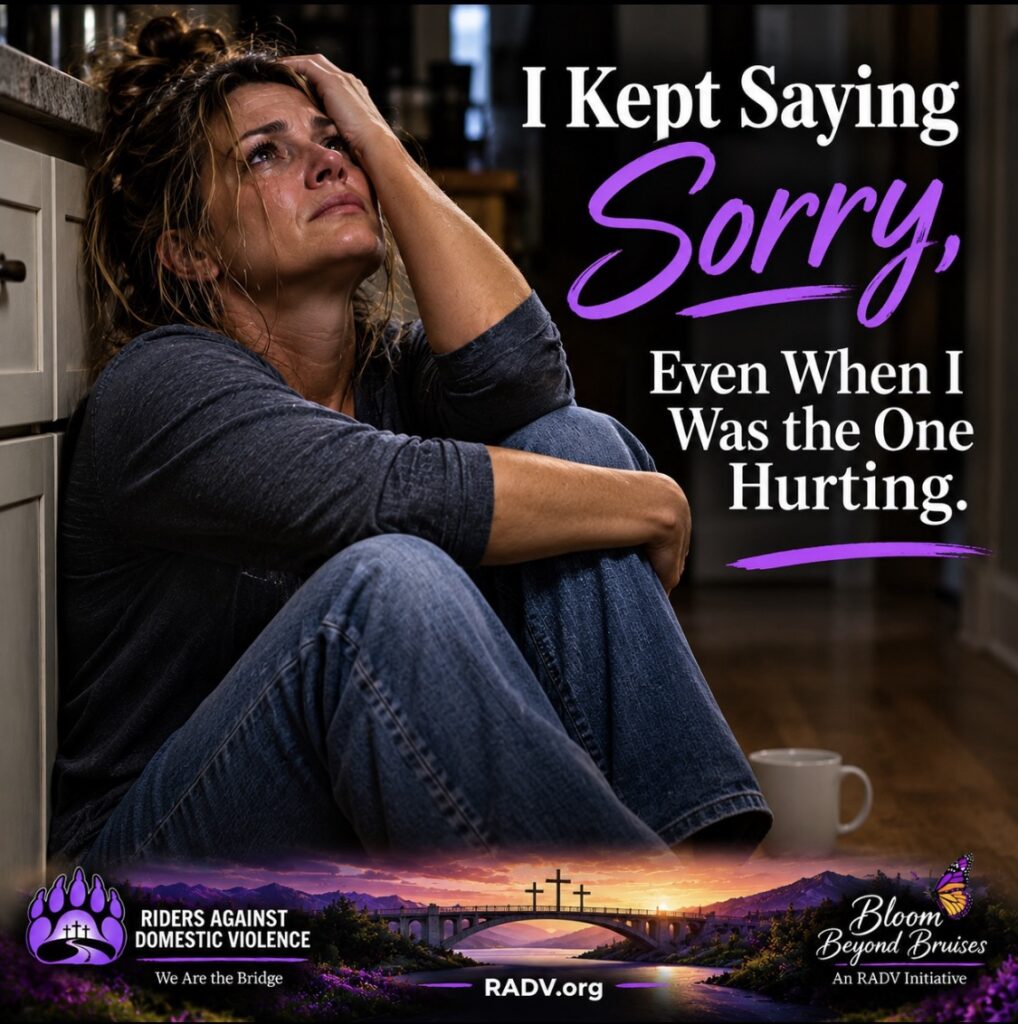
Even when you were the one who had been hurt.
The Apology That Was Never Really About Being Sorry
Imagine this.
You come home after a long day.
You’re tired.
You have a headache.
All you want is a quiet evening.
But something isn’t right.
Maybe dinner wasn’t prepared the way someone expected.
Maybe you forgot to return a phone call.
Maybe you said something that was misunderstood.
And suddenly, the atmosphere changes.
You can feel the tension.
You recognize the look.
You know an argument may be coming.
So you say it.
“I’m sorry.”
Not because you believe you’ve done something terrible.
But because you’re hoping those words will prevent what might happen next.
Sometimes they work.
Sometimes they don’t.
But you keep saying them anyway.
Because over time, apologizing has become less about accepting responsibility and more about trying to feel safe.
That’s a lonely way to live.
When You Begin Believing Everything Is Your Fault
One of the most damaging effects of repeated emotional manipulation is the way it can change how you see yourself.
You begin taking responsibility for another person’s moods.
If they’re angry, you wonder what you did.
If they’re distant, you wonder what you said.
If they stop speaking to you, you replay every conversation, trying to find your mistake.
You become so focused on keeping someone else happy that you lose sight of your own feelings.
And eventually, you start believing something that may not be true.
Maybe I really am the problem.
But here’s something important.
You are responsible for your own actions.
You are responsible for treating others respectfully.
You are responsible for acknowledging your mistakes.
You are not responsible for controlling another adult’s emotions or preventing their abusive behavior.
Those are very different things.
The Woman Who Says Sorry Just to End the Argument
There’s a woman somewhere who has learned to recognize the exact moment a conversation is about to go wrong.
She hears the change in someone’s voice.
She sees the frustration building.
She knows what might come next.
So she apologizes.
She tries to calm things down.
She tells herself it isn’t worth another fight.
And later, when she’s alone, she wonders why she always has to be the one to make things right.
She remembers a time when she felt confident.
When she didn’t question everything she said.
When she didn’t feel nervous about making ordinary decisions.
Now she feels as though she’s constantly walking on eggshells.
And perhaps nobody outside her home has any idea.
The Man Who Has Learned to Take the Blame
There’s also a man who has spent years trying to keep peace in his home.
He works hard.
He handles his responsibilities.
He tries to be a good husband, father, or partner.
But somehow, nothing ever seems to be enough.
He gets criticized for the decisions he makes.
His feelings are dismissed.
And when he tries to talk about what hurts, he’s told to toughen up.
So he stops explaining.
He apologizes.
He goes quiet.
And he carries the weight of believing he’s failing the people he loves.
To that man, I want to say:
You do not have to accept humiliation or intimidation to prove that you’re strong.
Men can experience emotional abuse, too.
And their experiences deserve to be taken seriously.
There Is a Difference Between Accountability and Control
Every healthy relationship requires apologies.
We all make mistakes.
We all say things we regret.
And we should be willing to acknowledge when we’ve hurt someone.
But a healthy apology comes from understanding and accountability.
It shouldn’t be demanded through fear.
It shouldn’t be used to establish who has power.
And it shouldn’t become a requirement for receiving basic kindness.
Not every argument, criticism, or disagreement is abuse.
The concern arises when there is a repeated pattern of intimidation, manipulation, humiliation, threats, or coercive control.
When one person consistently uses fear, blame, or punishment to dominate another, the relationship may be abusive.
Love should leave room for two people to have feelings, opinions, and dignity.
What Happens When You Stop Blaming Yourself?
Sometimes the first step toward healing isn’t leaving a relationship.
Sometimes it’s recognizing what has been happening.
It’s realizing that another person’s anger doesn’t automatically mean you’ve done something wrong.
It’s understanding that you can disagree respectfully without deserving punishment.
It’s learning that making a mistake doesn’t make you worthless.
And it’s beginning to separate your own responsibilities from the behavior of someone else.
For someone experiencing abuse, this realization can be difficult.
It may also be unsafe to suddenly change how you respond to a controlling partner.
That’s why speaking privately with a trained domestic violence advocate can be so important.
An advocate can help you explore your options and think through your safety without pressuring you to make decisions before you’re ready.
You deserve support that respects your circumstances.
God Never Asked You to Carry Everyone Else’s Blame
The Bible tells us:
“He healeth the broken in heart, and bindeth up their wounds.” — Psalm 147:3 (KJV)
Sometimes the deepest wounds aren’t visible.
They’re the doubts that follow you through the day.
The guilt you carry even when you haven’t done anything wrong.
The fear of disappointing someone.
The feeling that you’ll never be good enough.
But your value isn’t determined by another person’s approval.
Your worth isn’t measured by how many times you apologize.
And your future doesn’t have to be defined by the pain you’ve experienced.
Healing can begin with the realization that you deserve compassion, too.
To the Person Who Keeps Saying “I’m Sorry”
I want to leave you with something.
If you’ve spent years apologizing just to keep the peace, I hope one day you experience a relationship where you don’t have to be afraid of making a mistake.
Where you can ask a question without being humiliated.
Where you can disagree without being threatened.
Where you can express your feelings without being punished.
Where kindness isn’t something you have to earn by accepting blame.
And where an apology means two people are trying to make something right, not one person surrendering to keep the other happy.
You don’t have to become perfect to deserve respect.
You don’t have to accept responsibility for everything that goes wrong.
And you don’t have to carry the weight of someone else’s choices.
You are allowed to stop blaming yourself for things that were never yours to carry.
We Are the Bridge
At Riders Against Domestic Violence, we believe every survivor deserves to be heard, respected, and connected with meaningful support.
We are not a shelter or crisis hotline.
We are a bridge connecting survivors with resources and organizations that can help them find their next steps.
Whether you’re just beginning to recognize warning signs or rebuilding your life after abuse, help is available.
Visit RADV.org to explore survivor resources.
In the United States, the National Domestic Violence Hotline is available at 800-799-SAFE (7233) or thehotline.org.
And remember:
You don’t have to apologize for wanting to be treated with dignity.
Your story isn’t over.
Your best miles are still ahead.
💜 Riders Against Domestic Violence
We Are the Bridge.