
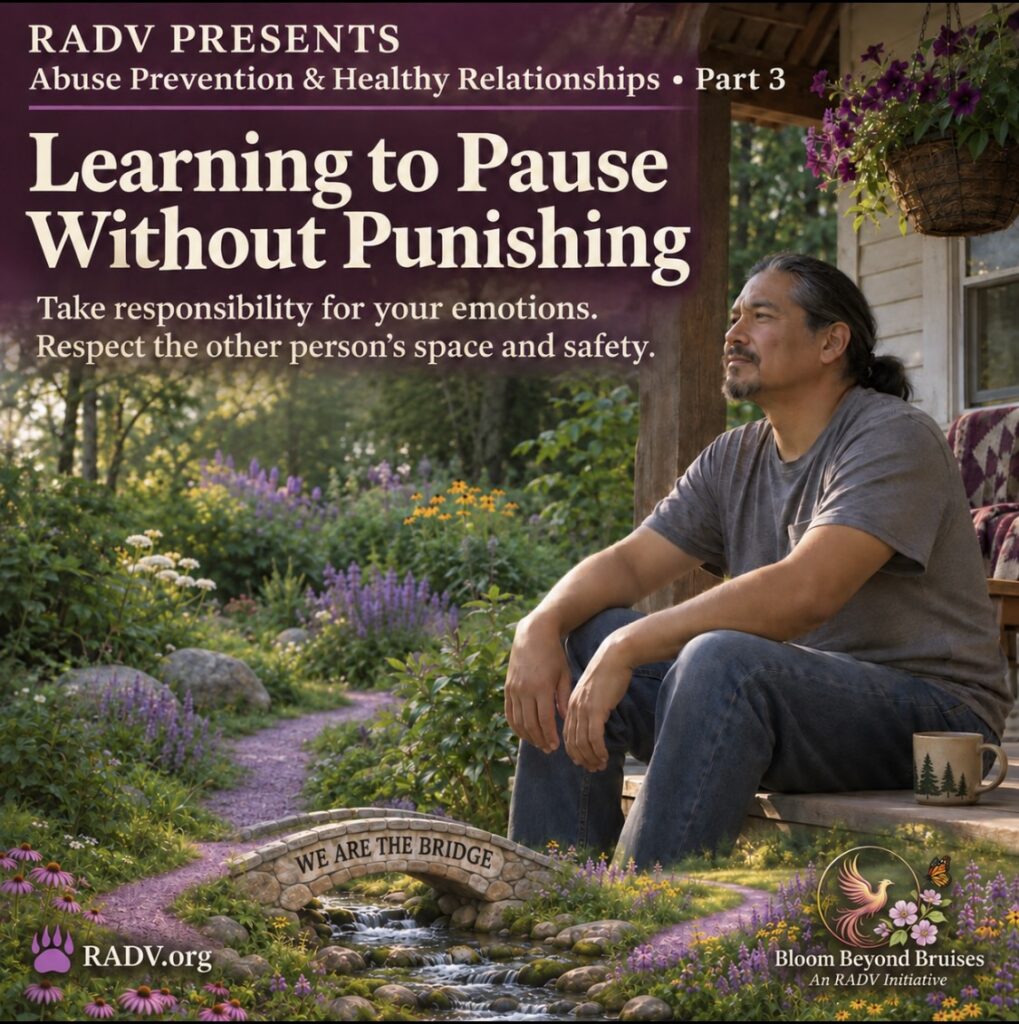
Abuse Prevention & Healthy Relationships — Part 3
You can feel the conversation changing.
Your shoulders tighten. You stop hearing the whole sentence. One word catches in your mind, and suddenly you’re reaching for every other time you felt misunderstood.
You want to answer immediately.
You want them to understand how much pressure you’re under.
And somewhere inside, you recognize that the next words out of your mouth could hurt.
That moment matters.
It is an opportunity to stop, take responsibility, and choose what happens next.
But how we take that pause matters, too.
A pause should create room for safety
There is a difference between saying:
“I’m getting worked up, and I need to step away so I can respond respectfully.”
And saying:
“Maybe a few days without me speaking to you will teach you.”
One takes responsibility for your behavior.
The other uses withdrawal as punishment.
A healthy pause does not require someone to chase you, plead with you, or surrender their boundaries before you will treat them respectfully.
Its purpose is to help you manage yourself—not manage another person through fear.
Needing space is not automatically harmful
Some people need quiet to collect their thoughts. Some become overwhelmed and struggle to speak. Others need distance because they do not feel safe.
Silence alone does not tell us someone’s intentions.
Nobody owes a partner constant conversation, immediate replies, affection, or physical intimacy. Taking space or ending contact for safety is not the same as using silence to control someone.
The questions to ask about your own behavior are:
“Am I taking responsibility for how I respond?”
“Or am I trying to make the other person uncomfortable enough to give me what I want?”
Those questions require honesty, especially when we feel justified.
Notice the moment before the damage
You do not have to wait until you are shouting to recognize that you need to stop.
Perhaps you begin interrupting.
Perhaps your voice becomes sarcastic.
Perhaps you start thinking, “I’ll make them listen,” or rehearsing a remark aimed at their most painful insecurity.
These are moments to take seriously.
Feeling anger does not make you a bad person. It also does not give you permission to frighten or degrade anyone.
You remain responsible for your choices.
What a respectful pause can sound like
In a relationship where both people can safely set boundaries, you might say:
“I’m too worked up to discuss this respectfully right now. I’m going to take some quiet time. Would you be comfortable checking in later this evening?”
Keep the explanation simple. Avoid adding one final insult before walking away.
If both people want to return to the conversation, agree on a reasonable check-in time. A check-in is an invitation to see whether you are both ready—not a deadline the other person must obey.
If they need more space, respect that.
And if you are leaving because you are unsafe, you do not owe an explanation, your location, or a promise to return.
Give space without taking away freedom
A pause must not become another form of intimidation.
Do not block a doorway, follow someone from room to room, take their phone or keys, or demand that they stay until the discussion is finished.
Do not slam objects or threaten consequences as you leave.
Do not continue the argument through a stream of messages.
The other person has the same right to stop participating that you do.
You can be disappointed about an unfinished conversation and still respect their freedom.
Use the break to change your response
Stepping away accomplishes little if you spend the entire time preparing a more hurtful argument.
For ordinary frustration, try something simple:
- Breathe slowly and comfortably.
- Take a gentle walk if it is safe.
- Drink some water and notice the tension in your body.
- Pray for patience and honesty.
- Write down what you feel without turning it into accusations.
Then ask yourself:
“What part of my behavior is mine to change?”
You may still disagree when the break is over. The goal is not to erase your feelings or abandon your perspective.
The goal is to return able to speak and listen respectfully.
Coming back does not erase what happened
If you have already said something cruel, taking a break does not remove the need for accountability.
You might say:
“I called you a name. That was wrong. You did not deserve it.”
Leave out the “but.”
Do not demand forgiveness because you have calmed down. Do not expect affection as proof that everything is fine.
The other person may still feel hurt. They may not want to continue the conversation.
Respecting that choice is part of taking responsibility.
When a pause is not enough
Abuse is not simply a conversation that became too heated. It can include deliberate intimidation and control, even when the person causing harm appears calm.
When threats, violence, or coercive control are present, a breathing exercise or communication technique is not an adequate response to the abuse.
Specialized intervention addresses responsibility, harmful beliefs, and patterns of power and control. The National Domestic Violence Hotline explains why ordinary anger management does not address those issues.
A survivor is not responsible for arranging that help or staying to see whether it works.
What Scripture teaches us
“He that is slow to wrath is of great understanding: but he that is hasty of spirit exalteth folly.”
— Proverbs 14:29 (KJV)
There is wisdom in recognizing that we do not have to act on the first impulse we feel.
We can pause before speaking.
We can examine our pride.
We can ask God for help accepting responsibility instead of finding another excuse.
This Scripture calls us to consider our own conduct. It must never be used to tell a frightened person to remain quiet, tolerate mistreatment, or stay in danger.
Patience does not require surrendering safety.
One step to practice today
When you are calm, choose one sentence you can use when you recognize your own escalation:
“I need to pause so I can handle this respectfully.”
Practice it as a commitment to your behavior.
Then decide what you will actually do during that pause to settle yourself and reflect.
You do not need your partner to manage this practice for you.
Make room for a different response
Some conversations can wait.
Someone’s dignity cannot.
You may not resolve a disagreement tonight. You may still need help understanding your feelings or changing long-standing habits.
But you can begin by refusing to turn your frustration into punishment.
At RADV, we believe prevention includes learning these skills—and recognizing when deeper, specialized help is needed.
A respectful pause leaves another person free.
Free to breathe.
Free to disagree.
Free to decide what they need next.
Riders Against Domestic Violence
We Are the Bridge.
Support and further reading
If you are experiencing abuse, you do not have to try these communication steps with the person harming you. Explore support and options at:
https://radv.org/find-help/
For information about specialized help for abusive behavior:
https://www.thehotline.org/resources/intervention-programs-for-abusive-behavior/
Explore the RADV Abuse Prevention & Healthy Relationships series:
https://radv.org/abuse-prevention-healthy-relationships/
RADV provides education and connections to resources. It is not an emergency service or treatment program.
A bridge to a flowering bloom beyond bruises.