
Riders Against Domestic Violence Presents
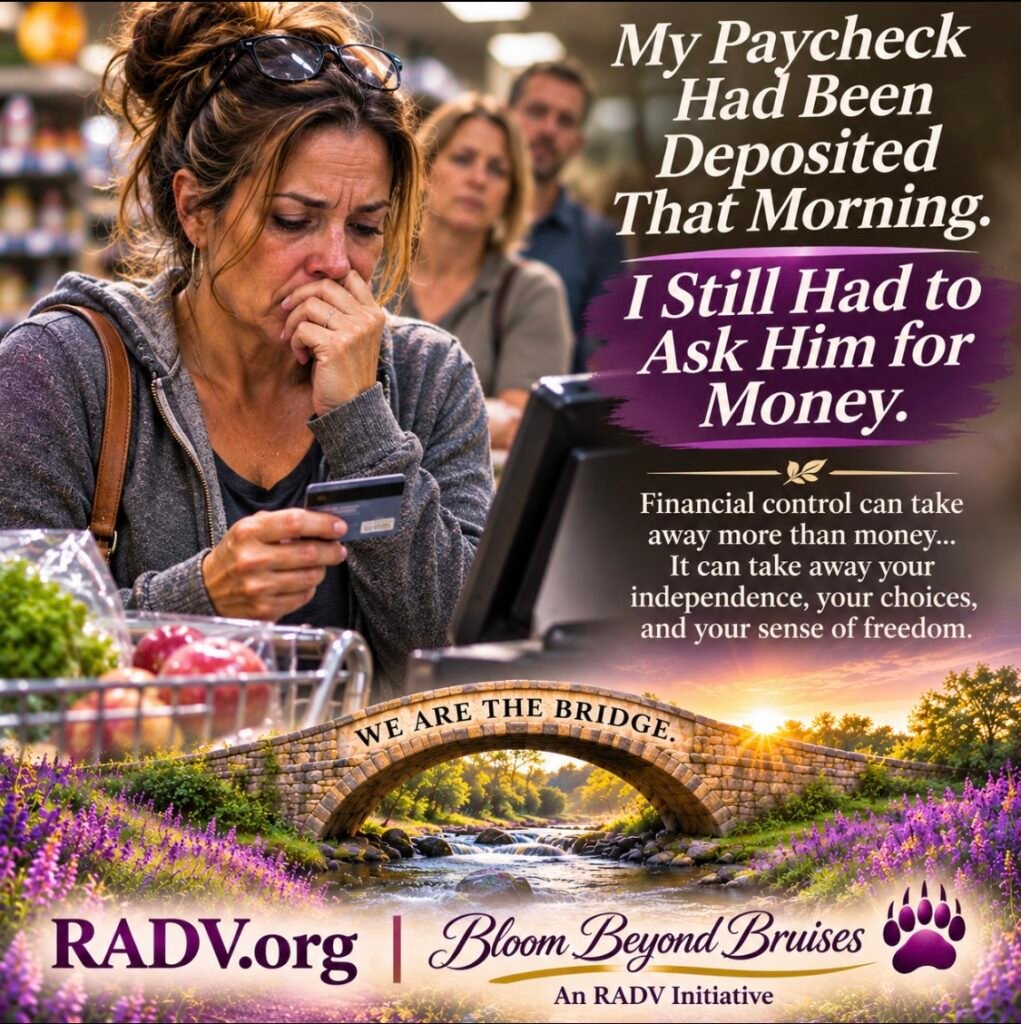
I was standing at the checkout counter when my debit card was declined. There were groceries on the conveyor belt, a woman behind me waiting to pay, and a cashier looking at me like she wasn’t sure what to say.
“Would you like to try another card?”
I could feel my face getting hot.
“No, just give me a second.”
I stepped aside and called my husband.
“Did you move money out of the account?”
“Yeah. Why?”
“I’m at the grocery store. My card was declined.”
“How much are you spending?”
I looked at the groceries. Chicken, vegetables, milk, cereal for the kids.
“About eighty dollars.”
“Eighty dollars? What the hell are you buying?”
I lowered my voice. I didn’t want anyone to hear.
“Just groceries.”
He sighed.
“Fine. I’ll transfer some money. But we need to talk when you get home.”
I stood there waiting for the transfer, wishing I could disappear.
The woman behind me smiled sympathetically.
I smiled back.
What she didn’t know was that my paycheck had been deposited that morning.
It Wasn’t Always Like This
When we first got married, we talked about building a life together. We opened a joint bank account. We discussed buying a house and saving for vacations. I thought sharing everything meant we were a team.
He was better with numbers than I was, so when he offered to handle the finances, I was relieved.
One less thing to worry about.
But somewhere along the way, handling the finances became controlling the finances.
I stopped seeing the bank statements. He changed passwords. When I asked how much we had in savings, he’d tell me not to worry about it.
“That’s my job.”
At first, I thought he was taking care of me.
It took years for me to understand that being taken care of shouldn’t mean being kept in the dark.
I Started Feeling Guilty for Needing Things
I remember standing in the bathroom one morning, looking at an almost empty bottle of shampoo.
I needed to buy more.
Such a stupid little thing to be worried about.
But I remembered the last time I’d bought some.
“Why do you need the expensive stuff? You think we’re made of money?”
So I added water to the bottle and shook it.
I could make it last another few days.
That’s what my life had become.
Stretching things. Putting things back. Going without.
Not because we couldn’t afford them, but because I didn’t want another argument.
Meanwhile, he’d come home with something new for himself.
A new tool. Something for his truck. A package he’d ordered online.
I never questioned him.
I knew better.
Somehow, the money we both earned had become his money, and everything I needed had become an expense he had to approve.
The Receipt
One evening, I came home from work and found him sitting at the kitchen table.
There was a receipt in front of him.
I’d stopped for lunch with a coworker.
Twelve dollars and eighty-seven cents.
“What’s this?”
I told him.
“Since when do you have money to go out for lunch?”
I started explaining that everyone from work had gone. That it wasn’t something I did often.
He interrupted me.
“You just don’t think, do you?”
I stood there in my work clothes, listening to him lecture me about twelve dollars.
I wanted to tell him that I’d worked eight hours that day. That I was tired. That I’d enjoyed sitting with someone and laughing for half an hour.
But I didn’t.
I apologized.
Later, I went into the bathroom and cried.
Not over the money.
Over the fact that I was a forty-six-year-old woman who had just been made to feel ashamed for buying herself lunch.
When I Asked About My Own Money
One night, I finally found the courage to ask if I could have a separate account.
Nothing secret. Nothing complicated.
Just a little money of my own.
He stared at me.
“What do you need your own account for?”
I told him I wanted some independence.
His expression changed.
“Are you planning on leaving me?”
“No. That’s not what I said.”
“Then why are you hiding money?”
“I’m not hiding anything.”
He stood up so quickly that his chair scraped across the floor.
I felt my stomach tighten.
He walked toward me, pointing his finger in my face.
“After everything I do for you, this is how you repay me?”
I backed away.
He slammed his hand against the kitchen counter, and I jumped.
Then he told me if I ever tried to leave, I’d walk away with nothing.
The house was his. The money was his. I’d never make it on my own.
I didn’t bring up the account again.
It wasn’t just money he was controlling. It was my ability to imagine a life without him.
I Began to Believe Him
That’s the part I struggle with most.
I have a job. I’ve raised children. I’ve managed a household. I’ve spent years taking care of everyone around me.
But when I think about leaving, I feel helpless.
I don’t know how much money we have.
I don’t know what debts are in my name.
I don’t know what I could afford.
Sometimes I look at apartments online, then close the page because the rent seems impossible.
I wonder how I’d pay for groceries, insurance, or a car repair.
And then I hear his voice in my head.
“You’d never make it without me.”
I hate admitting this, but sometimes I believe him.
He’s spent years telling me that I’m terrible with money. That I don’t understand how the world works. That I’d lose everything if he wasn’t there to take care of me.
And after hearing something long enough, it starts sounding like your own thoughts.
Nobody Knows
My friends think we’re doing well.
We have a nice house. We drive decent cars. We go out to dinner occasionally.
From the outside, we look comfortable.
But last month, my sister asked if I wanted to go away with her for a weekend.
I told her I couldn’t afford it.
She looked surprised.
“Really? You both work.”
I didn’t know how to answer.
How do you explain that you live in a beautiful house but can’t access your own money?
How do you explain that you earn a paycheck but have to justify buying underwear?
How do you explain that your husband can spend hundreds of dollars without a conversation, but you feel sick to your stomach over a twelve-dollar lunch?
So I told her we were trying to save money.
She understood.
Or at least she thought she did.
The Question That Stayed With Me
A few weeks ago, a woman at work was talking about opening a savings account.
She said she wanted to put a little money aside for herself.
“Just something that’s mine,” she said.
Nobody thought it was strange.
Nobody accused her of being selfish.
Nobody asked if she was planning to leave her husband.
It was just an ordinary conversation between women.
But I couldn’t stop thinking about it.
Something that’s mine.
I realized how long it had been since I’d felt that way about anything.
My paycheck. My time. My decisions.
Even my future felt like something that belonged to someone else.
That night, I sat in the driveway after work for a few minutes before going inside.
I wasn’t ready to face another evening of pretending everything was fine.
And I found myself whispering something I’d never said out loud before.
“I don’t know how much longer I can live like this.”
Maybe You Understand
Maybe you’ve stood in a checkout line wondering whether your card would work.
Maybe you’ve hidden a receipt because you were afraid of the questions.
Maybe you’ve handed over your entire paycheck and then had to ask for money to buy something you needed.
Maybe you’ve been threatened with losing your home, your children, or everything you’ve worked for if you ever leave.
And maybe you’ve wondered why you feel so powerless when you’ve spent your whole life being responsible.
Financial abuse isn’t simply a disagreement about spending. Couples can have budgets, shared accounts, and different opinions about money without abusing one another.
Financial abuse happens when someone uses money, access to resources, or financial threats to control another person’s choices and independence.
It can happen to someone who earns a good living. It can happen in a beautiful home. It can happen to someone who appears to have everything.
And it can make leaving an abusive relationship feel impossible.
Having a paycheck doesn’t mean you have financial freedom when someone else controls what you’re allowed to do with it.
You Don’t Have to Figure It All Out Today
If this story sounds familiar, you may be wondering where to begin.
You might not know what accounts exist, what debts you share, or what resources would be available if you needed help.
Those are understandable concerns.
A trained domestic violence advocate can help you explore financial safety, housing options, legal resources, and other forms of support.
You don’t have to confront your partner or make sudden financial changes that could put you at greater risk. Your safety comes first.
And you don’t have to decide everything today.
Sometimes the first step is simply talking to someone who understands why money can become such a powerful barrier to safety.
Faith for the Road Ahead
“The LORD also will be a refuge for the oppressed, a refuge in times of trouble.” — Psalm 9:9 (KJV)
God sees the struggles that other people don’t see.
He sees the woman standing in the checkout line, the tears behind the bathroom door, and the fear of an uncertain future.
Your worth is not measured by how much money someone allows you to spend.
You deserve dignity, safety, and the freedom to make decisions about your own life.
Seeking help is not a betrayal of your marriage or your faith.
We Are the Bridge
At Riders Against Domestic Violence, we understand that abuse can take away much more than someone’s sense of safety.
It can take away their confidence, their independence, and their belief that they could ever survive on their own.
That’s why our mission matters.
RADV exists to help connect survivors with trusted organizations and professional resources that can help them understand their options and find support.
We aren’t here to judge you for staying. We aren’t here to tell you that leaving is easy.
We’re here to help you find the bridge between where you are today and the support you deserve.
Visit RADV.org for survivor resources and information.
In the United States, the National Domestic Violence Hotline is available at 800-799-SAFE (7233) or thehotline.org. If your communications are monitored, consider using a safer device to seek help. If you’re in immediate danger, contact emergency services when safe.
And to the woman standing at the checkout counter, waiting for permission to spend the money she earned:
I wish you could see yourself the way you deserve to be seen.
You are more capable than you’ve been led to believe.
You are more valuable than the money in someone else’s account.
And your future deserves to belong to you.
💜 Riders Against Domestic Violence
We Are the Bridge.
RADV.org