
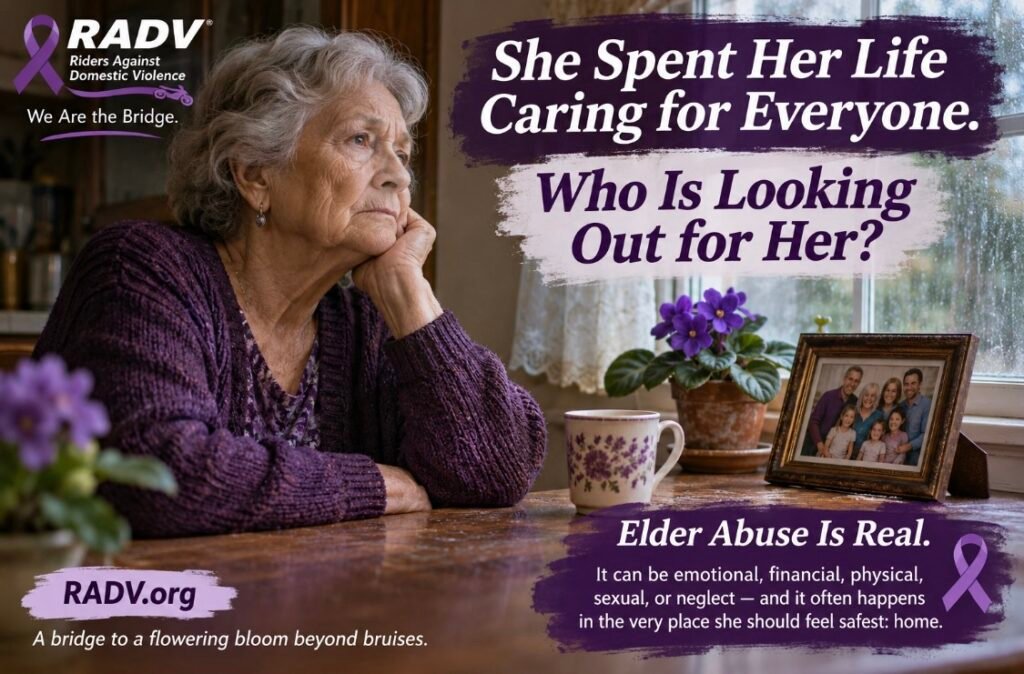
Elder Abuse — The Harm We Don’t Talk About Enough
“I spent my whole life taking care of everyone else. I never imagined I’d be afraid to ask for something in my own home.”
She was 76 years old.
She had raised three children, worked most of her adult life, buried her husband, and survived hardships that would have broken many people.
But now she found herself sitting at the kitchen table, wondering whether she was allowed to spend twenty dollars of her own money.
Her daughter had taken over the bank accounts.
At first, it seemed helpful.
Then came the questions.
“What do you need that for?”
“You don’t understand money anymore.”
“You should be grateful I’m even taking care of you.”
Eventually, she stopped asking.
She stopped mentioning things she needed.
And little by little, a woman who had spent decades making decisions for herself began to believe she no longer had the right to make any.
This is one face of elder abuse. And it happens far more often than many people realize.
Abuse Doesn’t Have an Age Limit
When we talk about domestic violence, we often picture younger adults trapped in controlling relationships.
But abuse doesn’t disappear when someone turns 60, 70, or 80.
Sometimes it begins later in life.
Sometimes it has been happening for decades.
And sometimes the person responsible is someone the older adult loves and trusts.
A spouse.
An adult child.
A grandchild.
A caregiver.
Someone who was supposed to protect them.
Elder abuse can take many forms, including:
- Emotional abuse: Humiliation, threats, intimidation, isolation, or constantly making someone feel worthless.
- Financial exploitation: Taking money, misusing bank accounts, pressuring someone to sign documents, or controlling their finances without proper authority.
- Physical abuse: Hitting, pushing, restraining, or deliberately causing injury.
- Neglect: Failing to provide necessary food, medication, hygiene, shelter, or medical care when responsible for someone’s care.
- Sexual abuse: Any unwanted sexual contact or activity without consent.
- Coercive control: Using fear, dependency, threats, or isolation to take away someone’s independence.
Not every disagreement about finances, driving, or medical decisions is abuse. Families sometimes face difficult decisions about safety and caregiving.
But there is a difference between helping someone remain safe and using their vulnerability to control them.
Growing older should never mean surrendering your dignity.
When the Person Hurting You Is Family
One of the most painful realities of elder abuse is that the person causing harm may be someone the victim spent a lifetime loving.
Imagine being afraid of your own son.
Imagine worrying that speaking up might mean losing contact with your grandchildren.
Imagine knowing someone is taking advantage of you but fearing that reporting it will leave you completely alone.
For many older adults, those fears are very real.
They may depend on the person harming them for transportation, meals, housing, medications, or daily care.
Some remain silent because they don’t want their children to get into trouble.
Others feel ashamed.
And some have been told so many times that they are confused, forgetful, or incapable that they begin doubting their own judgment.
That silence should never be mistaken for consent.
The Abuse Nobody Sees
Sometimes elder abuse leaves bruises.
Other times, it leaves an older man staring at a telephone he is no longer allowed to use.
It leaves a grandmother afraid to open her own mail.
It leaves a retired husband being threatened with abandonment whenever he disagrees with his spouse.
It leaves someone sitting in a nursing facility wondering why their family never visits, unaware that another person has been interfering with their calls.
Not all isolation is intentional abuse, and not every unexplained injury indicates mistreatment. But changes in behavior, unexplained financial activity, fear around particular individuals, and repeated interference with personal choices deserve attention.
Especially when someone seems frightened to speak freely.
Men Can Be Victims, Too
We cannot have an honest conversation about elder abuse without acknowledging older men.
Men may experience physical abuse, emotional cruelty, financial exploitation, sexual abuse, and neglect.
Yet many were raised in a generation where admitting vulnerability was considered weakness.
They may believe they should be able to handle the situation themselves.
They may fear ridicule or disbelief.
Some have spent their entire lives providing for their families, only to find themselves financially controlled, emotionally intimidated, or isolated in their later years.
At Riders Against Domestic Violence, we believe every survivor deserves to be heard.
Abuse is not determined by gender, and dignity does not have an expiration date.
What Can We Do?
Elder abuse often continues because the people around a victim don’t recognize what they’re witnessing.
We can change that.
Check on older relatives, neighbors, and friends.
Spend time listening rather than assuming everything is fine.
When possible, speak privately with someone you are concerned about.
Pay attention when an older adult suddenly loses access to their money, becomes isolated, appears fearful, or seems unable to make ordinary decisions.
Respect their autonomy. Don’t automatically assume that age or disability means someone cannot make decisions.
And if someone tells you they are being mistreated, take them seriously.
You don’t have to investigate the situation yourself.
You don’t have to confront the suspected abuser.
In fact, confronting someone who is abusive can sometimes increase the danger.
What matters is helping the person reach qualified professionals who understand elder abuse and can assess the situation safely.
If You Are an Older Adult Experiencing Abuse
Please hear this.
You are not a burden.
You have not outlived your right to respect.
Your money, your home, your relationships, and your personal decisions matter.
Needing assistance does not give another person permission to humiliate, threaten, exploit, or harm you.
And loving someone does not mean you must accept abuse from them.
You may feel frightened about what happens if you speak up.
You may worry about losing your home, your caregiver, or your family.
Those concerns deserve to be taken seriously.
You do not have to make every decision today.
But you deserve the opportunity to speak confidentially with someone who can help you understand your options.
Where to Find Help
If you or someone you know may be experiencing elder abuse in the United States:
Adult Protective Services (APS)
APS agencies investigate reports of suspected abuse, neglect, and exploitation of vulnerable adults according to state law.
Find your local agency through the National Adult Protective Services Association:
Eldercare Locator
A public service of the U.S. Administration for Community Living that connects older adults and families with local support services.
Call 1-800-677-1116
Website: https://eldercare.acl.gov
National Domestic Violence Hotline
For older adults experiencing abuse in an intimate relationship, confidential support and safety planning are available.
Call 1-800-799-SAFE (7233)
Text START to 88788
Website: https://www.thehotline.org
If someone is in immediate danger, call 911 in the United States.
If you suspect abuse, you can seek guidance even when you are uncertain what is happening. Reporting obligations and APS eligibility vary by state.
RADV — We Are the Bridge
Riders Against Domestic Violence was founded on a simple belief:
No survivor should have to face abuse alone.
That belief does not change with age.
Whether someone is 25 or 85, whether they are male or female, whether they have experienced abuse for six months or forty years, their safety and dignity matter.
RADV is not a shelter, emergency hotline, or investigative agency.
Our mission is to help connect survivors with qualified resources, professional services, and pathways toward safety.
Visit https://radv.org to explore our survivor resources and information.
Because sometimes the most important thing we can do is remind another human being that their life still matters.
That they still have a voice.
That they still deserve kindness.
And that it is never too late to seek a safer tomorrow.
Riders Against Domestic Violence
We Are the Bridge.
A bridge to a flowering bloom beyond bruises.