When the Abuse Ends, but the Healing Is Just Beginning
October 28, 2026 | Domestic Violence Awareness Month
“Healing doesn’t happen the moment you leave. Sometimes, that is where the hardest part of the journey begins.”
Throughout Domestic Violence Awareness Month, we have talked about recognizing abuse, understanding its many forms, finding the courage to seek help, and the importance of standing beside survivors.
But today, on Day Twenty-Eight, I want to talk about something that doesn’t always receive the attention it deserves.
What happens after the abuse ends?
The Silence After the Storm
For someone who has never experienced domestic violence, it might seem that leaving an abusive relationship would bring immediate happiness, peace, and freedom.
And while freedom is certainly something worth celebrating, the reality can be much more complicated.
Imagine spending years walking on eggshells, carefully choosing every word, watching someone’s mood, and constantly wondering what might happen next.
Then, one day, that person is no longer controlling your life.
The threats may have stopped. The arguments may be over. The door may finally be closed.
But your mind and body haven’t necessarily received the message that you’re safe.
You might still jump when someone raises their voice.
You might apologize for things you haven’t done.
You might feel guilty for making a decision without asking permission.
You might find yourself waiting for something terrible to happen, even when everything around you is peaceful.
The abuse may have ended, but its effects don’t simply disappear.
And that is something every survivor deserves to understand.
Learning to Trust Yourself Again
One of the most damaging things an abusive relationship can do is slowly take away someone’s confidence in their own judgment.
When someone repeatedly tells you that you’re wrong, worthless, incapable, or responsible for everything that goes wrong, those words can become deeply embedded in how you see yourself.
Even after leaving, survivors may question their decisions.
Am I doing the right thing?
Can I really make it on my own?
What if I fail?
What if everything they said about me was true?
Let me tell you something.
The person who worked so hard to convince you that you were worthless was never qualified to determine your worth.
You were somebody before the abuse.
You remained somebody throughout the abuse.
And you are still somebody today.
Your confidence may need rebuilding, but your value never disappeared.
Healing Doesn’t Follow a Calendar
Sometimes the people around survivors have good intentions but unrealistic expectations.
They might say things like:
“You should be happy now.”
“Why are you still thinking about that?”
“It’s over. You need to move on.”
But trauma doesn’t operate according to someone else’s timetable.
There may be good days when you feel strong, hopeful, and excited about the future.
There may also be difficult days when a memory, a sound, a smell, or an unexpected situation brings back feelings you thought were behind you.
That doesn’t mean you’ve failed.
It doesn’t mean you’re moving backward.
It means healing can be complicated.
And nobody has the right to decide how quickly you should recover.
Rediscovering the Person You Were Meant to Be
One of the most beautiful parts of recovery is watching someone begin to rediscover themselves.
Sometimes it starts with something small.
Choosing what to wear without worrying about criticism.
Listening to music you enjoy.
Spending time with friends without having to explain yourself.
Taking a class.
Finding a hobby.
Laughing without feeling guilty.
Making plans for tomorrow.
These may seem like ordinary moments to someone who has always enjoyed personal freedom.
But to a survivor, they can represent something extraordinary.
They represent the return of choice.
And choice is something abuse works very hard to take away.
Over time, those small decisions can become the foundation for a completely different life.
Not necessarily the life you had before.
Perhaps something even more meaningful.
A life built around your own values, your own dreams, and your own understanding of happiness.
To the Families and Friends Who Want to Help
If someone you love has survived domestic violence, understand that your support may be needed long after the relationship has ended.
Don’t pressure them to heal faster.
Don’t become frustrated when they struggle with decisions.
Don’t assume that because they’re physically safe, everything is suddenly okay.
Listen.
Encourage.
Respect their boundaries.
Celebrate their progress, even when it seems small.
And perhaps most importantly, remind them through your actions that healthy relationships do not require fear, control, or obedience.
Sometimes the greatest gift you can give a survivor is the freedom to be themselves without judgment.
A Message From RADV
At Riders Against Domestic Violence, we believe our responsibility doesn’t end when someone escapes an abusive situation.
Survivors need more than a way out.
They need access to resources, information, encouragement, and opportunities to rebuild.
They need to know there are people who recognize what they’ve experienced and understand that recovery is a journey.
That is why our mission is built around a simple promise:
We Are the Bridge.
We connect survivors with resources that can help them move toward safety, stability, and a future of their own choosing.
We don’t pretend that one conversation, one article, or one resource can erase years of pain.
But we do believe that every connection matters.
Every encouraging word matters.
Every person who chooses to stand beside a survivor matters.
And every step forward deserves recognition.
Your Best Miles Are Ahead
To the survivor reading this today:
You may not recognize the person you’ve become.
You may still be struggling to understand everything that happened.
You may wonder whether you’ll ever feel completely comfortable in your own skin again.
I cannot promise that every day ahead will be easy.
But I can remind you of something important.
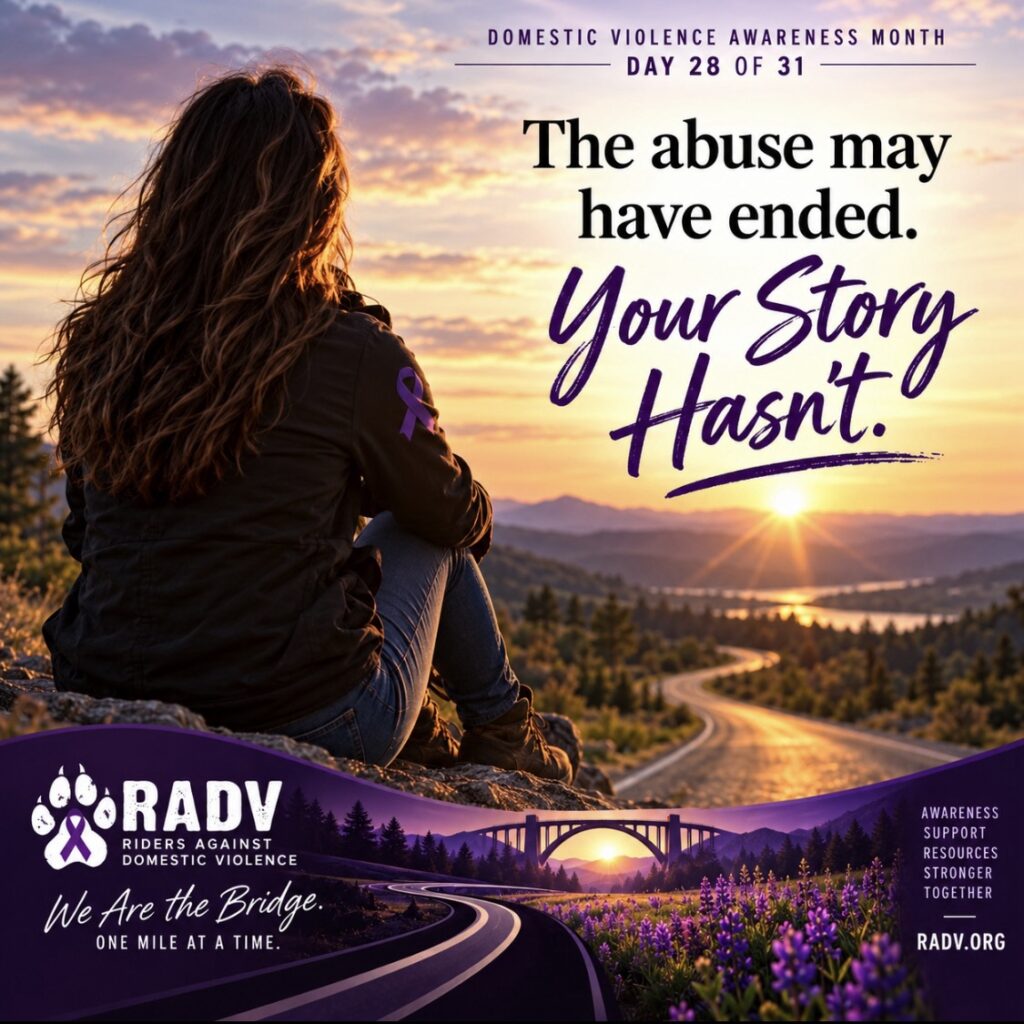
Your story did not end with what someone did to you.
There are still places you haven’t been.
People you haven’t met.
Moments of happiness you haven’t experienced.
And possibilities you may not even be able to imagine today.
You don’t have to figure everything out at once.
You don’t have to prove your strength to anyone.
And you certainly don’t have to measure your healing against someone else’s expectations.
Take your time.
Find your footing.
Reach for support when you need it.
And remember that even the longest journey begins with a single mile.
Your best miles are ahead.
We Are the Bridge
If you or someone you know is experiencing domestic violence, or trying to rebuild after abuse, visit https://radv.org.
Our website connects survivors with resources and information to help them explore their options and find support.
If you are in immediate danger, contact emergency services when it is safe to do so.
In the United States, the National Domestic Violence Hotline is available at 1-800-799-SAFE (7233) or through thehotline.org.
You are not alone.
Your voice matters.
Your future matters.
And your story is not over.
Riders Against Domestic Violence (RADV)
We Are the Bridge.
One Mile at a Time.
Day 28 of Domestic Violence Awareness Month — October 28, 2026