
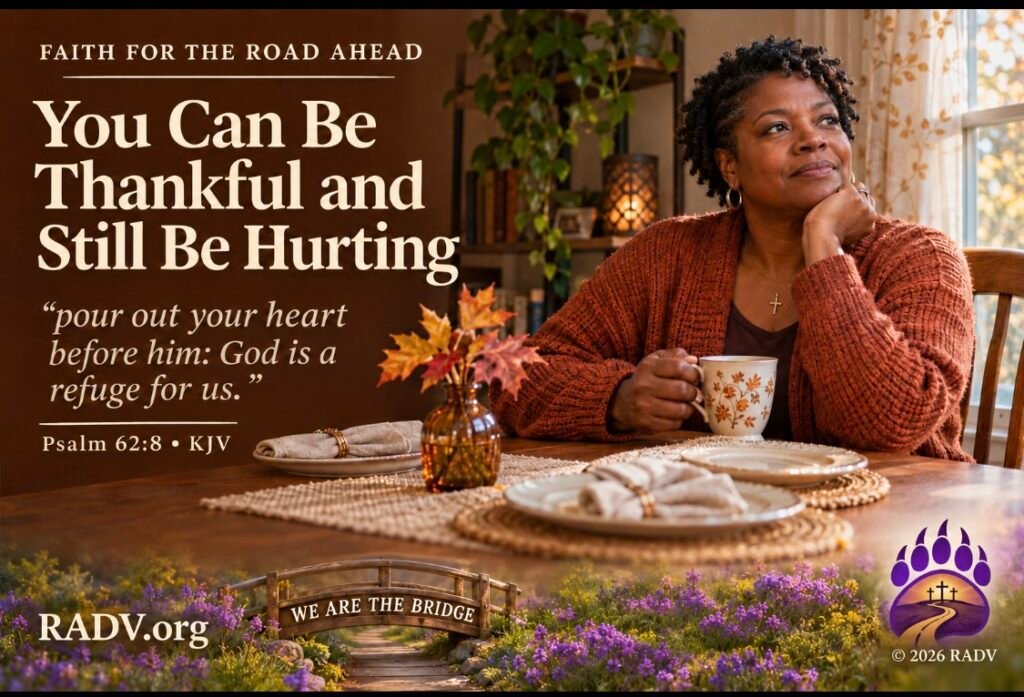
You Can Be Thankful and Still Be Hurting
By Dave Beatty, Founder of Riders Against Domestic Violence
“Trust in him at all times; ye people, pour out your heart before him: God is a refuge for us. Selah.”
— Psalm 62:8 (KJV)
Someone asks what you’re thankful for, and you know the answers you’re supposed to give.
Your children. Your health. A roof over your head. Another day.
You mean those things. You really do.
But there is something else you don’t say.
You’re thankful for your home, but you wish you weren’t afraid of the person inside it. You love your family, but you’re exhausted from making everything look okay. You’re grateful that you made it out, but you miss the holidays you once hoped you would have.
So you smile, give your answer, and keep the rest to yourself.
As Thanksgiving approaches here in the United States, there will be plenty of reminders to count our blessings. There is goodness in that. Sometimes noticing a small kindness helps us get through a difficult day.
But gratitude should never become another reason to hide your pain.
You can appreciate what is good in your life and still tell the truth about what hurts.
Psalm 62:8 gives us room to do exactly that.
Bring God the part you leave out
The verse invites us to pour out our hearts before God.
Think about how different that is from carefully choosing an answer that will keep everyone comfortable.
Pouring out your heart leaves room for the things you struggle to explain: disappointment, fear, grief, gratitude, and the hope you are almost afraid to hold on to.
You can pray, “Thank You for my children,” and then say, “Lord, I’m worried about what they’re hearing.”
You can be grateful for a new beginning and admit that starting over feels lonely.
You can thank God for getting you through yesterday while asking for help with today.
Those feelings can exist together. You don’t have to sort them into a more acceptable version of yourself before you pray.
Having something good does not make the harm acceptable
Some survivors have heard gratitude used against them.
You should be thankful I provide for you.
After everything I do, you still complain.
Other people have it much worse.
Words like those can make a person question whether they have any right to ask for things to change.
But paying the bills does not excuse intimidation. Gifts do not cancel threats. A pleasant afternoon does not erase the fear of what might happen later.
You can recognize someone’s generosity and still recognize their harmful behavior. You do not owe silence in exchange for what they have provided.
The same is true after leaving. Having somewhere safer to live does not mean you must stop grieving. Relief does not arrive with a rule that you can never feel sad again.
Your feelings deserve room, even when someone else thinks you should be “happy now.”
A refuge is somewhere you can seek shelter
Psalm 62 describes God as a refuge—a place to turn when you need protection and support.
That is a meaningful image for someone who has spent too much time hiding how they feel.
You may have learned to watch every expression, soften every concern, or apologize before asking an ordinary question. Bringing your heart to God can begin with the words you have been swallowing.
I’m scared.
I need help.
I don’t know what comes next.
Faith does not require you to remain in danger. You can pray while seeking practical support. You can talk with a qualified advocate while asking God for wisdom. You can make decisions about your safety without waiting for someone else to agree that the harm was serious enough.
Your life matters throughout that process.
Let this holiday be honest
Perhaps this will be your first holiday in a different home. Perhaps you will be around people who don’t understand why you left. Perhaps you are still living in a difficult situation and doing what you can to get through it safely.
You do not have to create a picture-perfect celebration to make the day worthwhile.
A quiet meal can matter. A conversation with someone trustworthy can matter. A moment of laughter can be real even if you cry later.
And if joy feels far away, you do not have to perform it for other people.
For those supporting a survivor, leave room for an honest answer when you ask how they are doing. Listen without rushing them toward a brighter interpretation. Sometimes a person needs to know that telling the truth will not cost them your kindness.
At Riders Against Domestic Violence, we want our message to be clear: you deserve support as you are today.
Our mission is to be a bridge to resources and professional services. You do not need a cheerful story or a finished recovery to reach toward help.
One gentle step for this week
In a private moment, if it is safe, finish these two sentences in your thoughts or in prayer:
One thing I’m thankful for is…
One thing I need help with is…
Give both answers the same respect. If you’re ready, consider sharing the second one with someone trustworthy. You can also visit RADV.org to explore resources at your own pace.
A prayer for the road ahead
Lord, thank You for the goodness that reaches us in difficult seasons. Help us receive it without feeling that we must hide our pain. Give those living with fear a path toward safety and trustworthy support. Be near to those facing a lonely holiday or grieving the life they hoped to have. Teach us to listen with patience and to offer help without judgment. Let RADV be a bridge that people can find when they need somewhere to turn. In Jesus’ name, amen.
This week, when you count your blessings, remember that your own life belongs among the things worth caring for.
You can be thankful.
You can be hurting.
And you are worthy of support through both.
You survived. You matter. Keep going. One mile at a time.
Riders Against Domestic Violence — We Are the Bridge.
© 2026 Riders Against Domestic Violence.