
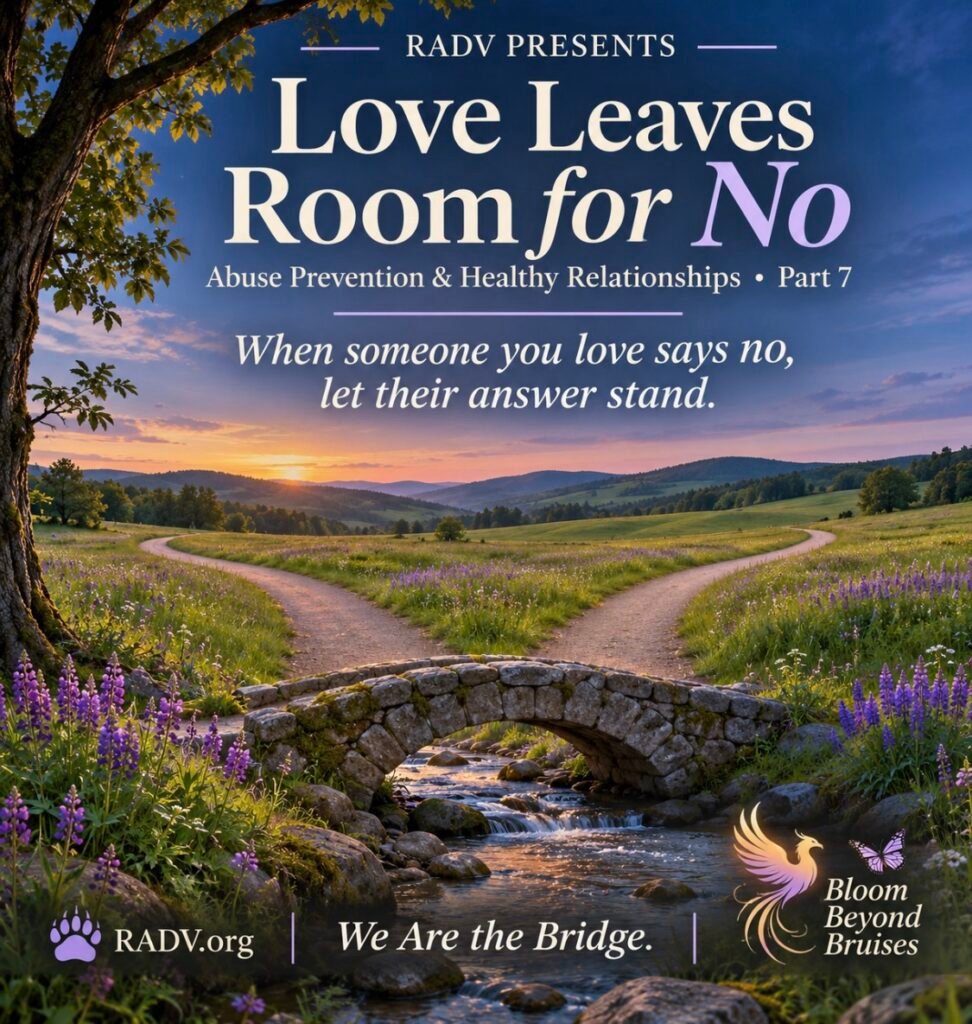
Abuse Prevention & Healthy Relationships — Part 7
The invitation is for Sunday dinner. You’ve been looking forward to it all week. As you reach for your keys, your partner says, “I think I’ll stay home this time. Tell everyone I said hello.”
You feel disappointed. You wanted them there beside you. Before you’ve even put your keys down, you’re thinking about what you could say to change their mind.
“Everybody’s going to ask where you are.”
“You went last time. What’s different today?”
“Come on. Do it for me.”
Each sentence might sound small. But imagine being on the other side of that conversation. You’ve already answered. Now you’re standing in the kitchen trying to come up with a reason good enough to be allowed to stay home.
That moment gives us a question worth asking ourselves.
When someone I love tells me no, what does it cost them to hold on to their answer?
What happens after the answer?
In a healthy relationship, people can want different things and say so. You can wish your partner would come along. You can miss them while you’re there. You can even tell them, “I’ll miss having you at the table.”
What matters is what you do with that disappointment. Do you go to dinner and bring home a slice of the pie they like? Or do you spend the evening sending updates about how disappointed everybody is, then come home looking for an apology?
An awkward exchange over dinner plans doesn’t tell the whole story of a relationship. Pay attention to the pattern. If saying no regularly brings ridicule, threats, or punishment, someone may begin saying yes because they’re afraid of what will happen otherwise. From the outside, it can look like two people who agree about everything. Only one of them knows what it costs to disagree.
Listen for the bargain you’re making
Sometimes pressure shows up in words we’ve heard all our lives.
“If you trusted me, you’d let me read your messages.”
“After everything I’ve done for you, you can do this one thing.”
“If you loved me, you would.”
Look at what those words ask another person to prove. A phone password becomes a test of honesty. A past kindness becomes a debt. Love itself gets called into question over one answer.
If you recognize your own words here, try naming what you want honestly. “I’ve been feeling insecure, and I’d like to talk about it.” That gives you something real to discuss. Your partner still gets to keep their messages private. Working through your insecurity is your responsibility.
When the question involves touch or intimacy
A person can welcome a hug yesterday and want space today. They can agree to intimacy and then change their mind. That freedom belongs to each person, including in a marriage.
If your partner pulls away, goes still, or seems unsure, stop. Give them room. They don’t have to find exactly the right words or provide a reason you consider fair. Silence is not consent, and wearing somebody down until they give in is coercion.
A caring response can be brief. “Okay. Would you like some space?” Then respect the answer. They shouldn’t have to spend the rest of the evening reassuring you that you’re loved.
Practice hearing no
Think back to a recent time someone gave you an answer you didn’t want. What did you do in the next five minutes? That’s often where you’ll find something specific you can change.
If you asked the same question four different ways, practice accepting the first answer. If you involved relatives to help make your case, take responsibility for bringing them into it. If you volunteered your partner for something without asking, call the organizer yourself and correct the arrangement.
Sometimes there’s a real practical issue to work out. If you were counting on a ride to dinner, you still need transportation. “Okay, I’ll arrange a ride” solves that problem. Your partner’s decision can stand while you figure out your next step.
If you’ve been using threats, monitoring, or punishment to get your way, take that seriously. Seek specialized help for abusive behavior. Make that call yourself. The person you’ve pressured should be free to make their own decisions while you do the work of changing yours.
If saying no has felt unsafe
Maybe you’re reading this from the other side. You say yes quickly because you remember what happened the last time you hesitated. Maybe you’ve wondered, Why didn’t I just speak up?
You know things about your situation that nobody else in that room knows. Doing what feels safest in the moment does not make you responsible for someone else’s coercion. You do not have to test a boundary, confront your partner, or show them this article to deserve support.
When it feels safe to reach out, RADV can help you find an advocate who will listen and talk through options with you. Find support through RADV.
What Scripture teaches us
“Love worketh no ill to his neighbour: therefore love is the fulfilling of the law.”
— Romans 13:10, KJV
That verse invites us to think about the person on the receiving end of what we call love. Can they speak honestly around us? Can they make a different choice and still count on our kindness?
Faith gives us reason to examine our own conduct. Using Scripture to demand affection, obedience, or access to another person’s body puts that burden on the very person whose dignity we are called to honor.
Back in that kitchen, your keys are still in your hand. Your partner has said they’d like to stay home. This time you say, “Okay. I’ll tell everyone you said hello.”
Later, someone at dinner asks where they are. “They’re having an evening at home,” you say, and pass the potatoes. Your partner’s answer stood. They didn’t have to prepare a defense for the family or for you when you got home.
That’s what room for no can look like in an ordinary life. Someone you love tells you the truth about what they want, and they can trust you with the answer.
Riders Against Domestic Violence
We Are the Bridge.
Read the Abuse Prevention & Healthy Relationships series · Learn about specialized help for harmful behavior