Behind the decorations, family gatherings, and holiday smiles, some survivors are fighting battles nobody sees.
The holidays are supposed to be a time of joy.
Families gather around tables. Christmas lights brighten neighborhoods. Children get excited about presents, traditions, and the magic of the season. Social media fills with pictures of smiling families, decorated homes, and messages about love and togetherness.
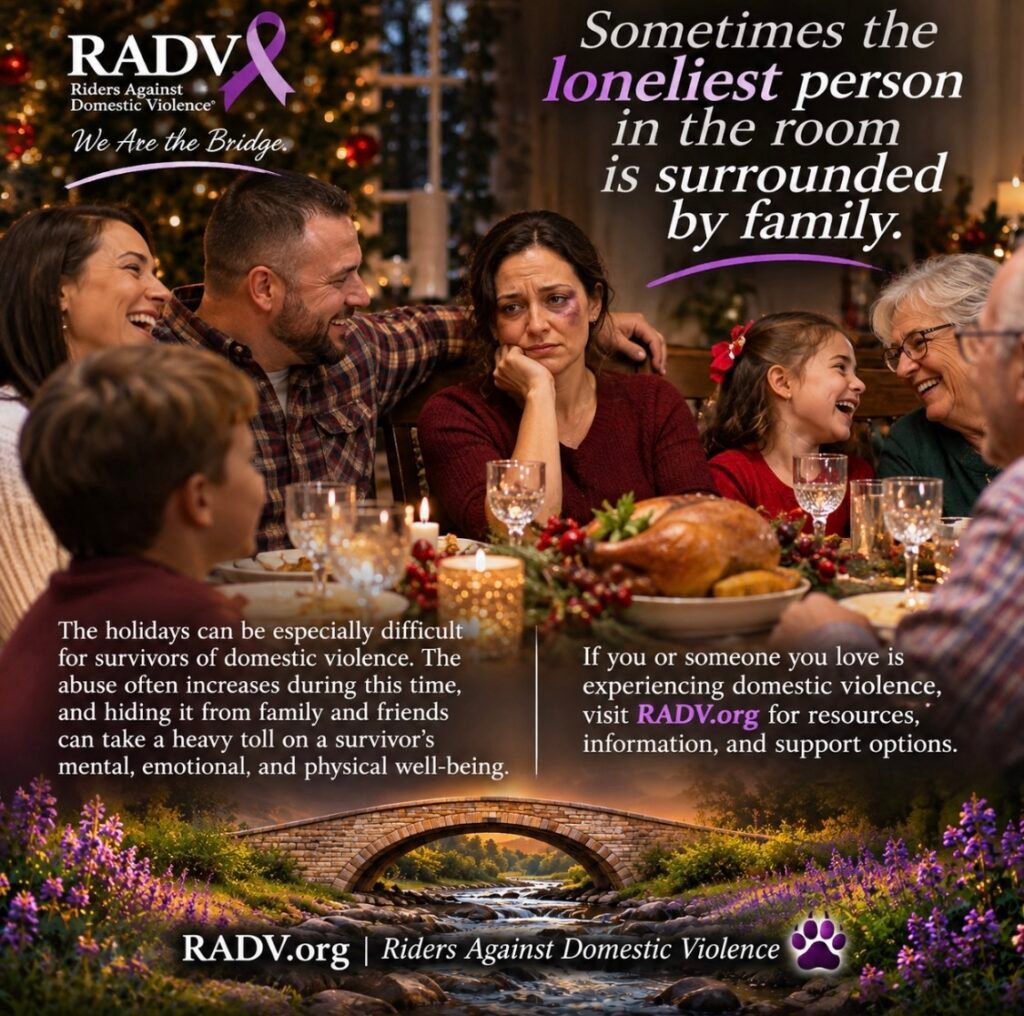
But behind some of those smiling faces is a reality that nobody at the dinner table knows about.
A woman sits beside her husband at Thanksgiving dinner, laughing at the right moments, helping serve the food, and pretending everything is wonderful.
Nobody knows what happened in their kitchen that morning.
Nobody knows about the argument that started over something insignificant. The accusations. The threats. The way he grabbed her arm hard enough to leave a mark she carefully covered with her sweater.
And nobody knows that before they walked through the front door, he leaned over and whispered, “You better not embarrass me today.”
So she smiles.
Because sometimes pretending everything is fine feels safer than letting anyone know it isn’t.
The Exhaustion of Pretending
For survivors of domestic violence, the holidays can bring an entirely different kind of stress.
The pressure to create a perfect Christmas. The financial strain of buying gifts. The increased time spent together at home. Family gatherings where everyone expects happiness.
And underneath it all, the constant effort to keep the abuse hidden.
Imagine sitting across from your mother, wanting desperately to tell her what’s happening, but knowing your abuser is watching every expression on your face.
Imagine your sister asking, “Are you okay? You seem quiet.”
And hearing yourself answer, “I’m just tired.”
You are tired.
But not from shopping, cooking, or wrapping presents.
You’re tired from being afraid.
Tired from measuring every word before you speak.
Tired from trying to keep the children happy while wondering what kind of mood your partner will be in when everyone leaves.
Tired from protecting a secret that is slowly wearing you down.
And perhaps the hardest part is knowing that everyone around you thinks you’re having a wonderful holiday.
When the Holidays Make Everything Worse
Domestic violence doesn’t take a holiday.
For some survivors, the season can bring additional danger and uncertainty.
Financial pressures, alcohol consumption, disrupted routines, and increased time together may intensify existing patterns of abuse. But these circumstances do not cause someone to become abusive, and they never excuse abusive behavior.
The responsibility always belongs to the person choosing to abuse.
Sometimes the abuse isn’t physical.
It’s the husband who refuses to let his wife spend Christmas with her family.
It’s the partner who deliberately starts an argument before every holiday gathering, making the survivor too upset or frightened to attend.
It’s the person who controls every dollar, then humiliates their partner for not buying enough presents.
It’s the threats whispered in private, followed by warm hugs and friendly conversation when relatives arrive.
And sometimes it’s the father who spends Christmas morning watching his children open presents while quietly enduring humiliation, intimidation, or violence from his partner.
Domestic violence does not discriminate.
Women, men, younger adults, older adults, and people from every background can experience abuse.
The circumstances may differ, but the isolation and fear can be painfully familiar.
The Children Who Notice More Than We Think
One of the most heartbreaking realities of domestic violence during the holidays is what children experience.
Children may not understand everything happening between their parents, but many recognize when something is wrong.
They notice when Mom suddenly becomes quiet.
They notice when Dad stops smiling after someone enters the room.
They recognize the tension before an argument even begins.
Some children become unusually careful, trying not to spill anything, make too much noise, or ask for something that might upset a parent.
Others try desperately to keep everyone happy.
They become little peacekeepers in a home where keeping the peace should never have been their responsibility.
And years later, what they remember about Christmas may not be the presents under the tree.
It may be the fear of what would happen after the relatives went home.
No child should have to carry that burden.
“Why Didn’t You Tell Us?”
It’s a question survivors sometimes hear when the truth finally comes out.
“Why didn’t you tell somebody?”
“Why didn’t you ask for help?”
“We were right there. You could have said something.”
But telling someone isn’t always simple.
Sometimes the person causing harm is standing just a few feet away.
Sometimes the survivor has been threatened with losing the children, the house, financial support, or even their life.
Sometimes they have been isolated for so long that they no longer believe anyone will help.
And sometimes they are simply trying to get through Christmas without another explosion.
Survivors may love their families deeply and still be terrified of what will happen if they reveal the truth.
Silence doesn’t necessarily mean everything is okay.
And a smile certainly doesn’t mean someone is safe.
This Holiday Season, Pay Attention to the People You Love
We aren’t suggesting that every quiet person at a family gathering is experiencing abuse.
But we are asking people to care enough to notice when something seems wrong.
Maybe your daughter hasn’t been herself lately.
Maybe your brother keeps making excuses for why he can’t visit.
Maybe your friend has stopped answering calls unless their partner is present.
Maybe someone you love seems nervous about going home.
You don’t have to interrogate them or demand explanations.
Sometimes a quiet conversation, away from others, can make a difference.
“I’ve noticed you don’t seem like yourself lately. Is everything okay?”
“I’m here if you ever need to talk.”
“You don’t have to explain anything you’re not ready to share.”
And perhaps most importantly:
“If something is happening, you don’t have to face it alone.”
Don’t pressure someone to leave before they’re ready. Don’t confront the suspected abuser or share the survivor’s situation without permission. Those actions can unintentionally increase the danger.
Instead, listen. Believe them. Respect their decisions. Help them find qualified support when they want it.
Sometimes the greatest gift you can give someone isn’t wrapped beneath a Christmas tree.
It’s the knowledge that someone cares and that they have somewhere safe to turn.
To the Survivor Who Is Dreading the Holidays
This part is for you.
The person already wondering how they’re going to get through Thanksgiving.
The woman hoping Christmas morning won’t turn into another argument.
The man who knows nobody would believe what’s happening behind his front door.
The parent trying to give the children beautiful memories while quietly struggling to hold everything together.
You may be surrounded by family and still feel completely alone.
You may be exhausted from pretending.
You may feel guilty because everyone else seems excited about a season you’re secretly dreading.
But please hear this.
You do not owe anyone the appearance of a perfect family at the expense of your safety.
You are not ruining Christmas by acknowledging that something is wrong.
You are not weak because you haven’t figured out what to do yet.
And you do not have to make a life-changing decision today to begin exploring your options.
Your safety matters.
Your feelings matter.
Your future matters.
Even during the holidays.
Especially during the holidays.
RADV Is Here to Help You Find Your Way Forward
At Riders Against Domestic Violence, we understand that reaching out for help can be frightening.
We also understand that not everyone is ready to leave, and not everyone knows what their next step should be.
That’s why our mission is to be a bridge.
Through our website, RADV.org, we help survivors locate resources, information, and professional services that may assist them in understanding their options and finding a safer path forward.
We are not a shelter, emergency service, or crisis hotline. We work to connect people with organizations and professionals equipped to provide direct assistance.
Whether you’re experiencing abuse yourself, worried about someone you love, or simply trying to understand the warning signs, we encourage you to explore the resources available through our website.
If someone monitors your phone or internet activity, consider using a safer device to seek help. Remember that browsing history and quick-exit buttons cannot guarantee privacy.
In the United States, the National Domestic Violence Hotline is available at 800-799-SAFE (7233) or by texting START to 88788. If you’re in immediate danger, contact emergency services when it is safe to do so.
This Christmas, Remember the People Behind the Smiles
As we gather with family and friends this holiday season, let’s remember that not every home filled with Christmas lights is filled with peace.
Not every family photograph tells the whole story.
Not every person laughing around the dinner table feels safe when the guests leave.
And not everyone looking forward to Christmas is looking forward to going home.
This year, let’s give something that costs absolutely nothing.
Compassion.
Understanding.
A willingness to listen without judgment.
And the courage to let someone know that help exists.
Because somewhere this holiday season, a survivor may be sitting at a beautifully decorated table, surrounded by people they love, silently wishing someone could see what they’re going through.
Maybe this year, someone will.
And maybe that moment of compassion will become the beginning of a different future.
Riders Against Domestic Violence (RADV)
We Are the Bridge.
RADV.org — A bridge to a flowering bloom beyond bruises.
Because everyone deserves to feel safe, not just during the holidays, but every day of the year.